

December is a long school break. Keeping children occupied without relying on screens or worksheets every day can be a challenge for parents. A December school holiday camp in Singapore gives children something different to look forward to: creative activities, games, new friends and opportunities to learn outside the classroom. The best part? They can develop useful life skills without feeling that they are back at school.
Why Holiday Camps Can Be Worth Considering
Children need time to relax during the holidays. They also enjoy having something to do, particularly when it involves meeting other children and trying activities they would not usually experience in class.
Confidence Grows Through Practice
- Not every child is comfortable speaking in a group.
- Some will volunteer straight away; others prefer to listen first.
- A supportive camp gives children room to try at their own pace.
- They might introduce themselves, share an idea or take part in a short presentation.
- Small steps can make unfamiliar situations feel less daunting over time.
Learning to Get Along With Others
Group activities can be messy. Children have different opinions, ideas and ways of doing things. Working through those differences is part of the experience.
They learn to take turns, listen and share responsibilities. They also get the chance to make friends beyond their usual school circle. For some children, that is one of the most enjoyable parts of the holiday.
Activities That Keep Children Engaged
A camp should offer more than a packed timetable. Children need activities that interest them, suit their age and leave enough room to enjoy themselves. A holiday program for youth might include storytelling, creative projects, speaking games and team challenges, depending on the programme.
Creativity and Communication
Storytelling gets children imagining. Drama gives kids a chance to try out different characters and really put themselves in someone else’s shoes. Team challenges push them to talk about their ideas and actually listen to what other people have to say.
When they’re a bit older, debates and presentations are often well received. If you’re a parent hunting for public speaking courses for high school students, look for classes that help teens speak their minds, organise what they want to say, and handle questions on the spot. Simply memorising a speech is not enough.
Making Speaking Practice Fun for Younger Children
Younger children may prefer something less formal. A speaking game, a short story or a show-and-tell activity can help develop public speaking skills for students without making the experience feel intimidating.
| Activity | Skills children can practise |
| Storytelling | Imagination and expression |
| Team games | Cooperation and problem-solving |
| Presentations | Organising and sharing ideas |
| Debates | Reasoning and listening |
| Drama and role-play | Creativity and confidence |
Choosing Activities by Age
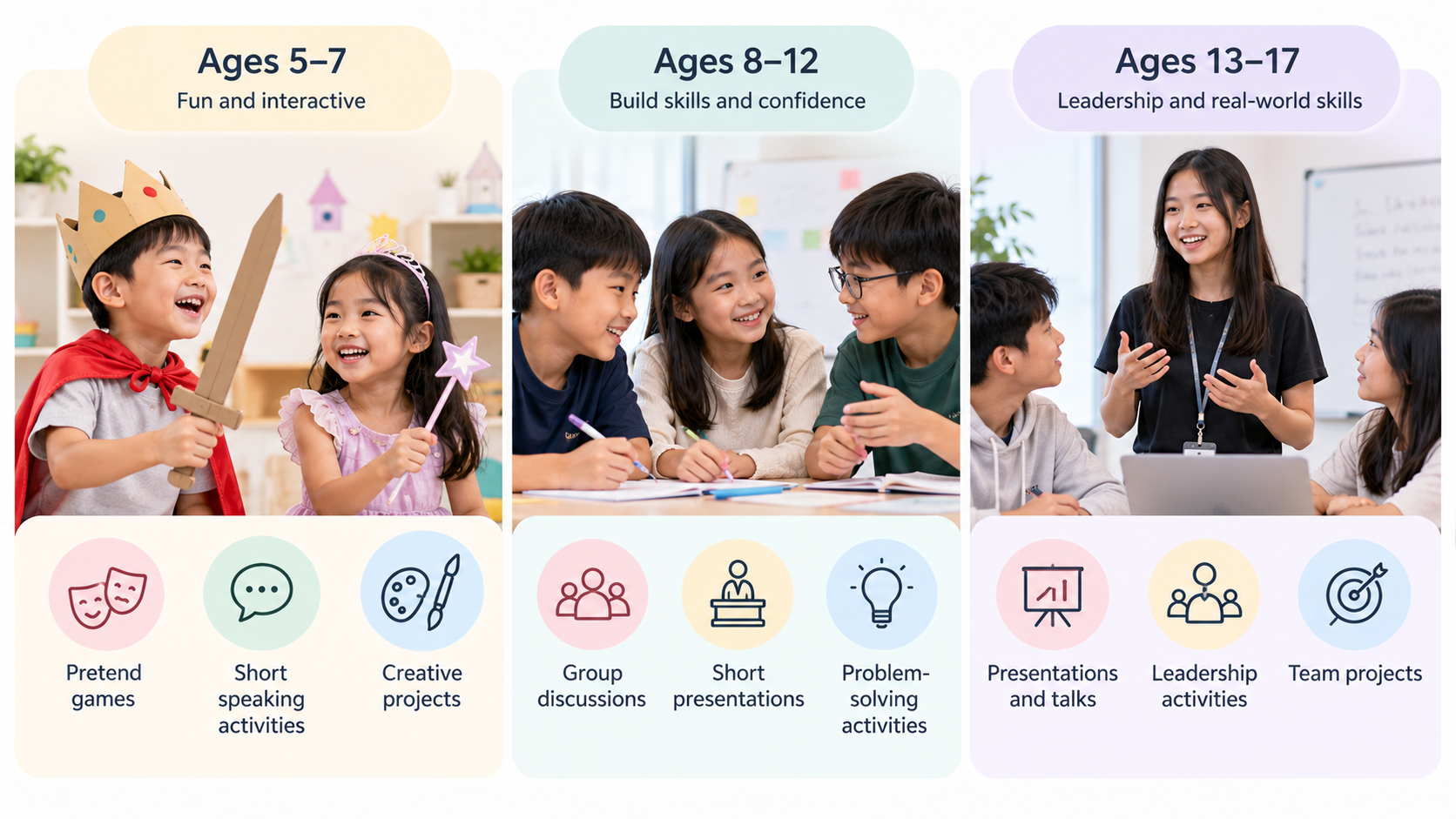
A seven-year-old and a teenager will rarely enjoy exactly the same programme. Younger children usually love pretend games and quick speaking gigs. Teens or older kids, though, often get excited about group talks, giving presentations, or stepping up as leaders.
If you’re sizing up holiday camps for your child, always look at whether the activities really fit their age and what they already know. Sure, a packed schedule can catch your eye, but don’t let it fool you—more activities aren’t always better.
What Parents Should Check Before Booking
The activity list is only part of the decision. Supervision, timings, location and the way instructors work with children deserve attention as well.
Safety Check
Find out who’s in charge during the sessions and what kind of support kids get throughout the day. Take a look at the venue – see where you’ll be dropping your child off and how you’ll get in touch if there’s an issue. If your child feels anxious in new places, don’t be shy about asking how the instructors help kids get involved without forcing anything.
The daily schedule matters. Children need structure, but breaks are important. A programme that moves from one task to another without much breathing room can become tiring.
Finding the Right Fit
Some children want to meet friends and try creative activities. Others have a more specific goal, such as becoming comfortable speaking in front of a group.
A speech class for kids may suit a child who wants focused communication practice. A broader camp can offer a wider mix of social and creative experiences. For teenagers, a holiday program for youth with debates and presentations may be more appealing than activities designed for younger children.
Ask how much time each participant gets to speak or take part. Find out whether beginners are welcome and how feedback is given. These details often tell you more than a long list of promised outcomes.
Helping Your Child Enjoy the Experience
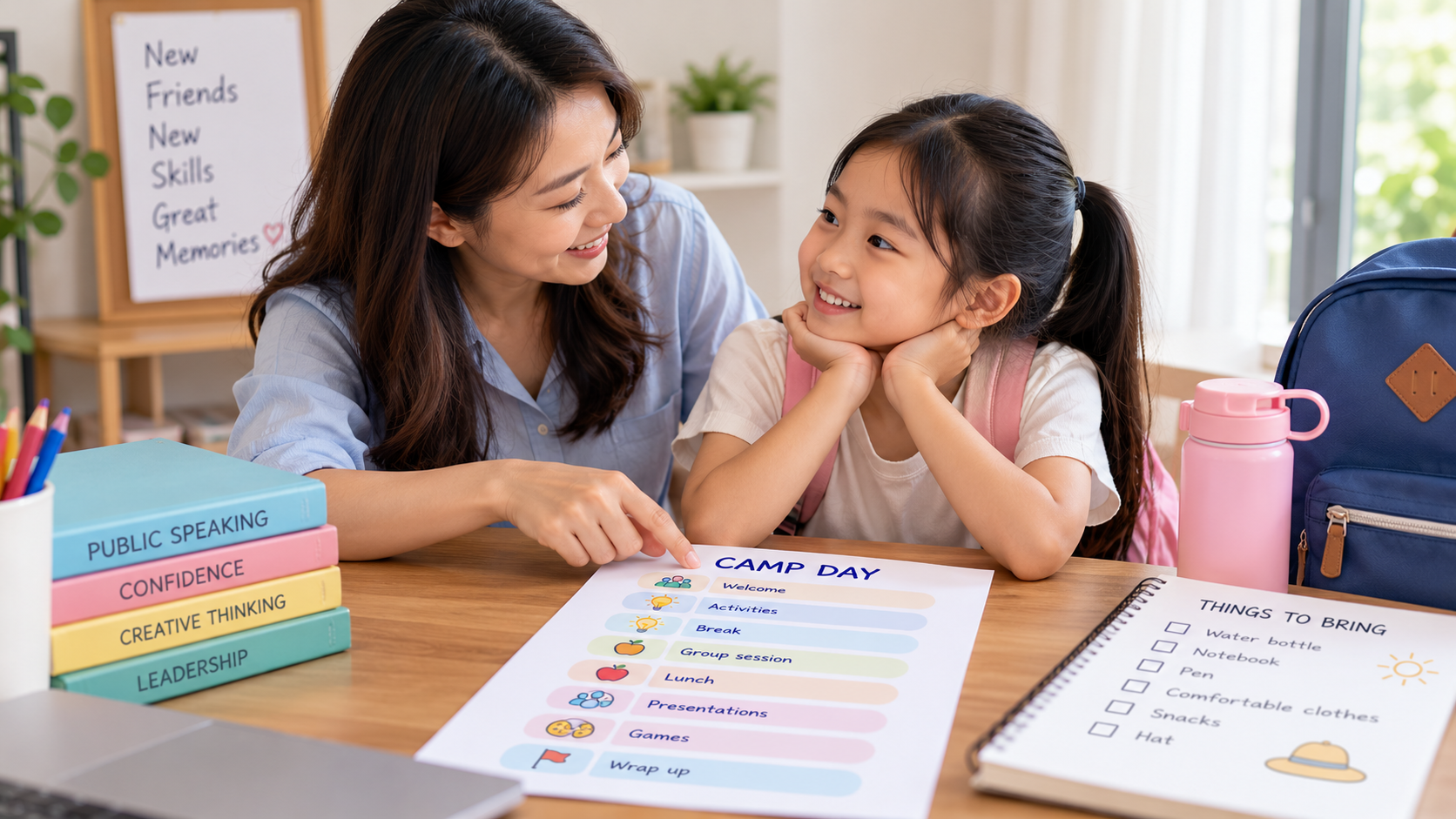
The first day may bring excitement, nerves or both. Talk through the plan beforehand. Explain what the day might look like and give your child time to ask questions. There is no need to promise that they will instantly make friends or become confident.
When comparing holiday camps for kids, consider the cost, location, supervision and activities together. Check what the fee includes and whether children need to bring anything.
For parents considering public speaking courses for high school students, it is worth asking whether students get regular speaking practice or mainly listen to instruction. A speech class for kids should also give children opportunities to make mistakes, receive feedback and try again.
Choosing a Holiday Camp That Helps Children Grow
The Voice House offers holiday programmes featuring public speaking, storytelling and interactive activities for children and teenagers. Parents can check the available programmes to see whether the activities suit their child’s age and interests.
A December school holiday camp in Singapore should give children something enjoyable to remember. Perhaps they try an activity they once avoided, speak up a little more or come home talking about a new friend. It does not have to be a dramatic change. Sometimes, a small step forward is enough.