

Ages 8 - 9
Turning Thoughts into Clear Expression
At The Voice House, the curriculum for our Emerging Voices (ages 8 – 9) helps students move beyond everyday speaking into more structured and thoughtful communication.
At this stage, children begin to shape their ideas more intentionally, learning how to organise their thoughts, explain their reasoning, and communicate with greater clarity and depth.
Through guided practice and structured speaking activities, we support students as they build stronger communication habits and gain confidence in expressing more developed ideas across different contexts.
1.
Building Strong Communication Skills
Students learn simple frameworks that help them structure their thoughts clearly and confidently. They use methods such as Point-Evidence-Link to build arguments, simple speech templates for different situations, and other guided structures to organise what they want to say in a clear and logical way.
2.
Speaking in Different Roles and Contexts
Students explore how communication changes dependingok on the situation. They practise speaking in different contexts such as sharing information, leading a group, or telling creative stories. This helps them understand tone, purpose, and audience in a practical way.
3.
Thinking, Responding, and Creating Ideas
Students begin to develop quicker thinking and stronger spontaneity. In parts of our curriculum, they will practise responding to prompts on the spot, giving simple rebuttals, and breaking down ideas into clear step-by-step explanations that others can follow easily.
4.
Expressive and Engaging Delivery
Students learn how to make their speaking more interesting and impactful. They explore techniques such as asking engaging questions, using vivid words, and adding expression to make their communication more lively and engaging.
5.
Learning Through Feedback and Reflection
Students grow through structured feedback and self-reflection. They learn how to improve using simple peer feedback methods and track their progress in key areas like clarity, confidence, and expression.
Ready to Help Your Child Find Their Voice?
Book a trial session or get in touch about your child’s communication journey!
Frequently Asked Questions
How do you challenge children without overwhelming them?
We gradually increase expectations based on each child’s readiness. Activities are designed to stretch thinking and communication skills while still remaining achievable and supportive.
The goal is to build confidence through challenge — not pressure.
What skills should my child have before joining this level?
Children do not need advanced speaking skills before joining. However, it helps if they are generally comfortable participating in simple conversations and group activities.
We focus on helping students continue developing:
- Thought organisation
- Confidence
- Expression
- Listening and responding skills
Will my child be required to speak in front of the whole class often?
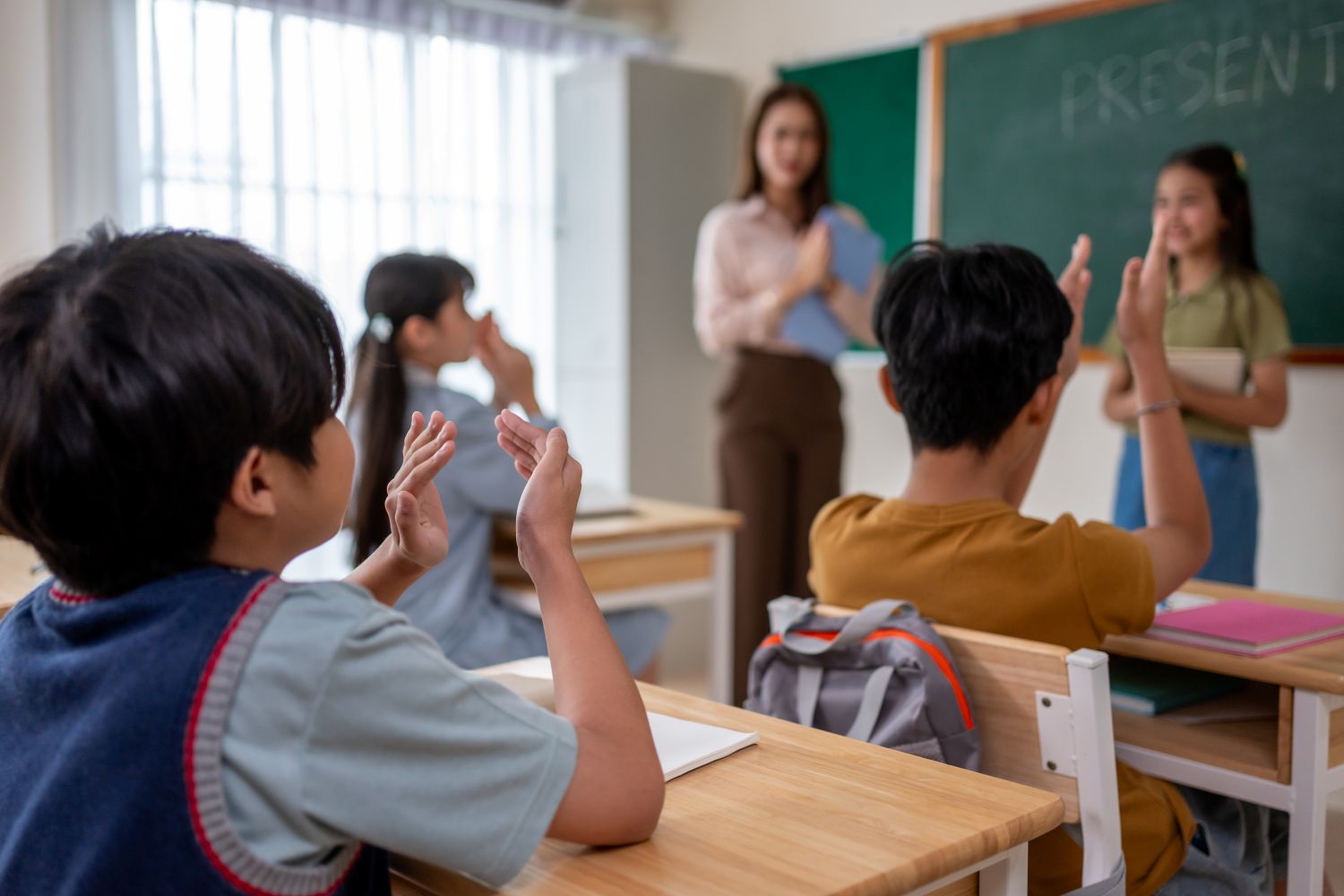
Students will have opportunities to speak in front of others, but we introduce this progressively and supportively. We do not believe in forcing children into uncomfortable situations before they are ready. We’ve built in a ‘mini performance’ milestone every 7 weeks where students present to the group in a low-pressure setting. This gradual exposure helps children become comfortable being the center of attention without overwhelming them. Exposure builds comfort naturally.
The goal is to help children become more comfortable expressing themselves over time through consistent practice and encouragement.
What does a typical Emerging Voices lesson look like?
Lessons usually include:
- Group discussions
- Structured speaking activities
- Thought organisation exercises
- Problem-solving and opinion-sharing
- Guided presentation practice
- Interactive communication games
Students are encouraged to think, respond and express themselves regularly throughout class.
Are activities more discussion-based or presentation-based?
Both are important. While students do practise presentation skills, a large part of the class focuses on discussion, interaction and real-time thinking.
We want students to develop communication skills that are useful not only on stage, but also in classrooms, conversations and everyday situations.
How is this different from the 6-7 year old level?
8-9 year olds are developmentally ready for more complex thought organisation, longer discussions, and multi-step reasoning. While 6-7 year olds focus on foundational clarity and confidence, Emerging Voices introduces problem-solving, opinion formation, and structured argument building.